Last updated by Ardmore Plumbers
No hot water, a pilot light that keeps going out, or a puddle spreading from the base of the tank: call (858) 363-8298 and we send the nearest available licensed plumber to diagnose it. Most Villa Park homes have a 40 or 50 gallon gas tank in the basement, and those wear out on a fairly predictable schedule.
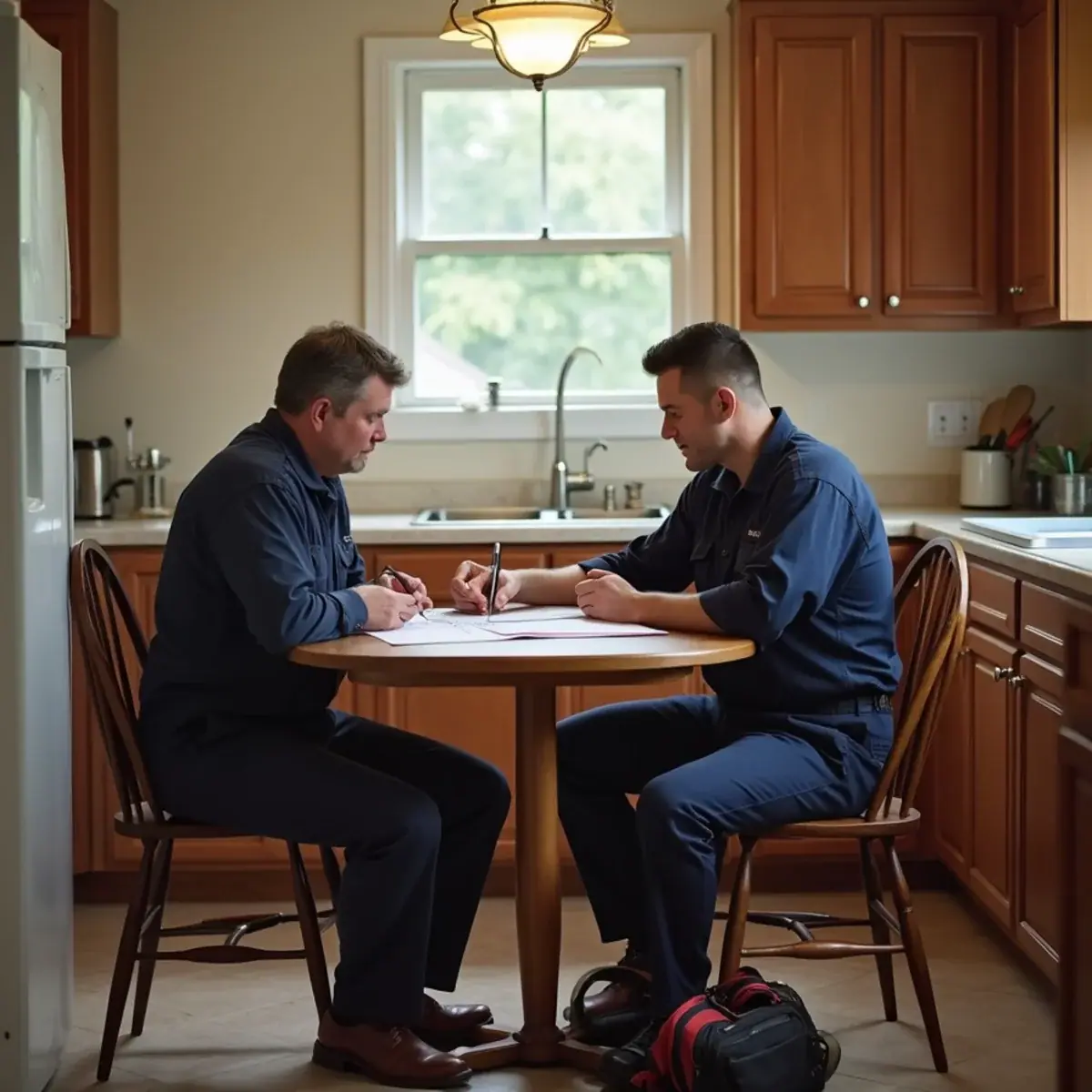
The plumber checks the burner, controls, venting and the tank itself, then tells you plainly whether a repair is worth it or the tank is done. Every plumber we send is licensed and insured in Illinois, and you get the price before work starts.
Water heater problems we repair
- No hot water: pilot out, a failed thermocouple or gas control valve, or on electric units a burned-out element or tripped high-limit switch.
- Not enough hot water: a broken dip tube mixing cold into the hot, sediment filling the tank bottom, or a thermostat set low.
- Pilot light out: a dirty or failing thermocouple, a clogged pilot orifice or a draft problem at the burner.
- Rumbling or popping: sediment on the tank bottom boiling as the burner heats under it.
- Leaking water heater: a loose fitting, a dripping temperature and pressure (T&P) relief valve, a weeping drain valve or a failed tank.
- Rusty or smelly hot water: a spent anode rod.
If you smell gas
Do not relight the pilot, flip light switches or use a phone near the heater. Leave the house and call your gas utility's emergency line or 911 from outside. The heater can be repaired once the leak is dealt with. In Villa Park the gas utility is Nicor Gas.
No hot water: safe checks before you call
- None at all, or running out fast? None at all points to the pilot, gas control or an electric element. Lukewarm or short supply points to sediment, a broken dip tube or the lower electric element.
- Gas heater: look through the sight window for a flame. Many newer gas controls have a status light that blinks a fault code; count the blinks. A pilot that keeps going out can mean a lint-clogged air intake screen at the base.
- Electric heater: reset the breaker once. If it trips again, leave it off; something is shorting.
- Water on the floor: do not reset a breaker or touch the controls on wet equipment or while standing in water. If you can reach the cold supply valve from a dry spot, close it, and treat it as a call for emergency plumbing.
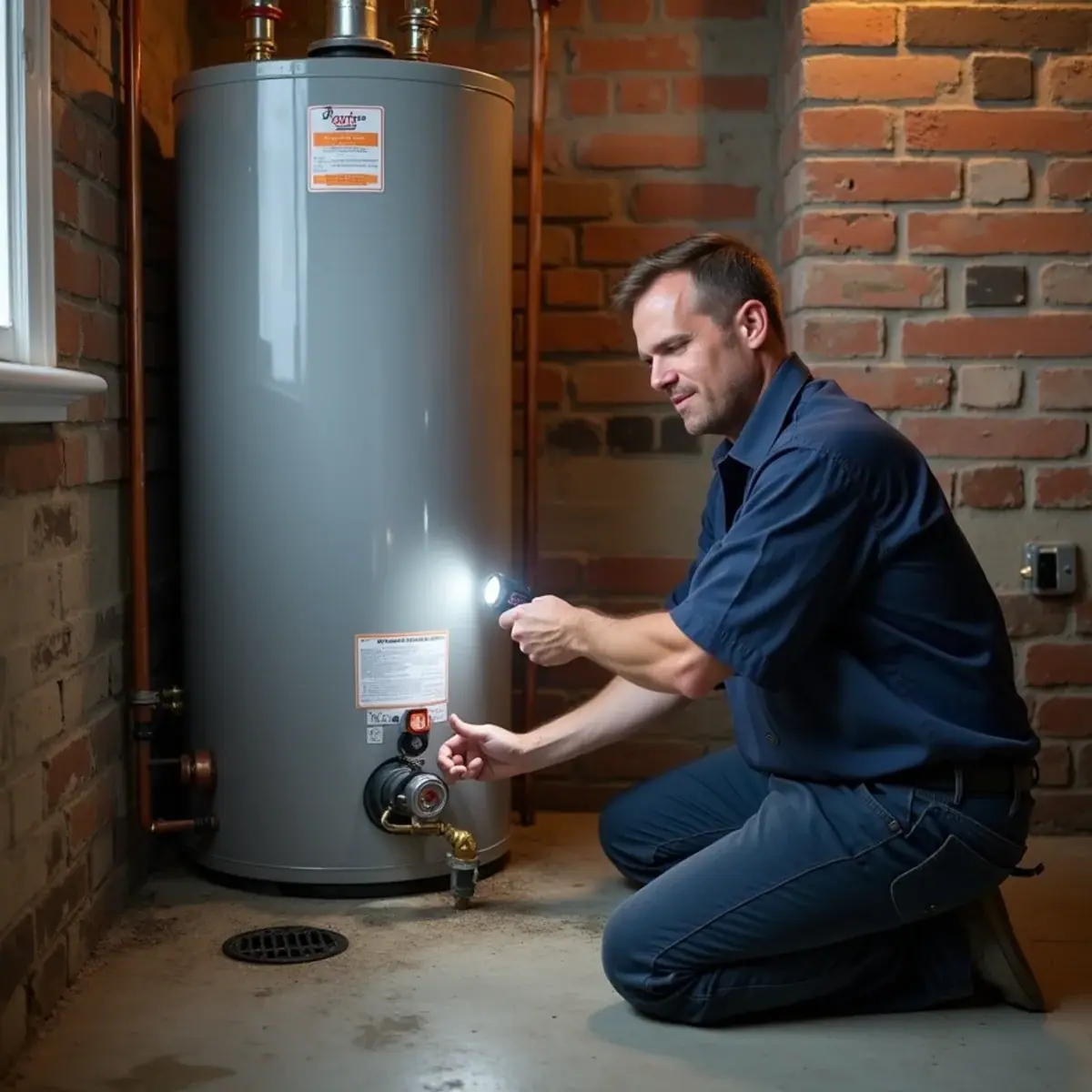
If it is safe, photograph the rating plate on the tank. Its model and serial number give the plumber the age, capacity and fuel, so the right part is more likely to come on the first trip.
Repair or replace: how to decide
Almost every part on a water heater can be replaced: thermocouples, gas valves, elements, thermostats, anode rods, dip tubes and T&P valves. The steel tank cannot. Once the tank itself leaks, the only fix is a new heater.
| Situation | Usually | Why |
|---|---|---|
| Pilot will not stay lit, tank under 8 years old | Repair | A thermocouple or gas valve is a contained part swap |
| Electric heater with no hot water | Repair | Elements and thermostats are replaceable |
| Water dripping from the T&P discharge pipe | Investigate | A worn valve, high water pressure or overheating |
| Water leaking from the tank body or bottom seam | Replace | A corroded tank cannot be patched |
| Tank over 10 to 12 years with a major part failure | Replace | Money spent on an old tank buys little time |
| Rusty or rotten-egg hot water, tank under 8 years | Repair | A new anode rod often fixes it |
| Repeated failures, or parts no longer made | Replace | Repairs on one tank keep adding up |
The manufacture date is coded in the serial number on the rating plate, and the plumber can read it for you. A gas valve that makes sense on a five-year-old tank is usually wasted on a fourteen-year-old one. If a replacement is proposed without a clear explanation of what failed, a second opinion is reasonable.
Gas tank water heater replacement: sizes, venting and permit
Water heater replacement in a typical Villa Park basement means a 40 or 50 gallon natural gas tank, sized to the household. Two full bathrooms and a soaking tub may call for 50 gallons or a high-recovery model; a two-flat often has a separate heater for each unit.
Venting
Standard gas heaters vent through a metal flue into a masonry chimney, often shared with the furnace. When the furnace has been changed to a sealed high-efficiency model, the heater may be left alone on a chimney too large to draft properly. The plumber checks draft at the draft hood with the burner running and looks for scorching or rust that point to exhaust spilling back.
Permit and code items
Villa Park requires a permit to replace a water heater, and the plumber pulls it. Code items on a replacement include a T&P discharge pipe run down to near the floor, a gas shut-off and sediment trap, correctly pitched vent connectors and, often, an expansion tank on the cold supply.
Where the water service has a check valve or pressure-reducing valve, heated water has nowhere to expand, so pressure spikes every cycle and the T&P valve drips. A small expansion tank absorbs it. The plumber also checks house pressure with a gauge, since high pressure shortens tank life (see plumbing repair for pressure problems).
Power-vent and tankless options for basement installs
When the chimney is no longer usable, a power vent water heater uses a fan to push exhaust through PVC pipe out the rim joist or basement wall. It needs an outlet and a clear route for the vent, and the fan makes some noise.
A tankless water heater heats water as it flows, so it does not run out during back-to-back showers and hangs on the wall instead of taking floor space. It usually needs a larger gas line than a tank, its own vent and yearly descaling on our hard water. Incoming water in a DuPage winter is cold, so it must be sized for the winter temperature rise.
Before recommending one, the plumber checks:
- Demand: how many showers and appliances run at once, and the flow the unit delivers at a winter temperature rise.
- Gas supply: whether the gas line and meter can carry the larger load.
- Venting and electrical: a clear route for the vent and an outlet for the controls.
- Maintenance: isolation valves for yearly descaling, and whether you will keep it up.
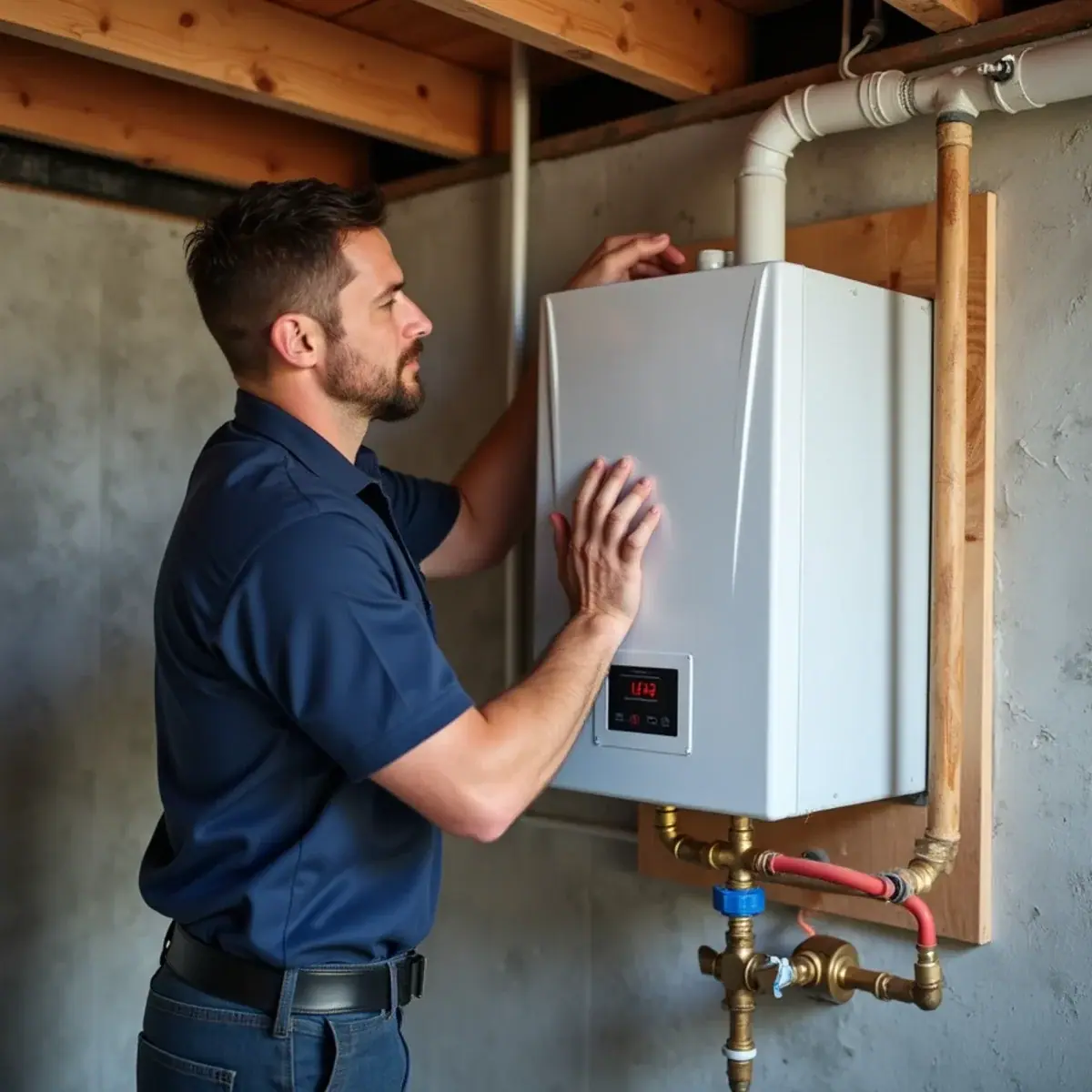
In Westmont condos and townhomes, where the heater often sits in a closet, space and vent routes shape the choice even more.
Lake Michigan water, sediment and how long a tank lasts here
Villa Park gets Lake Michigan water through the DuPage Water Commission. It is moderately hard, so each heating cycle drops minerals that settle on the tank bottom. Over years that layer insulates the water from the burner, causing the rumbling, wasting gas and overheating the bottom of the tank.
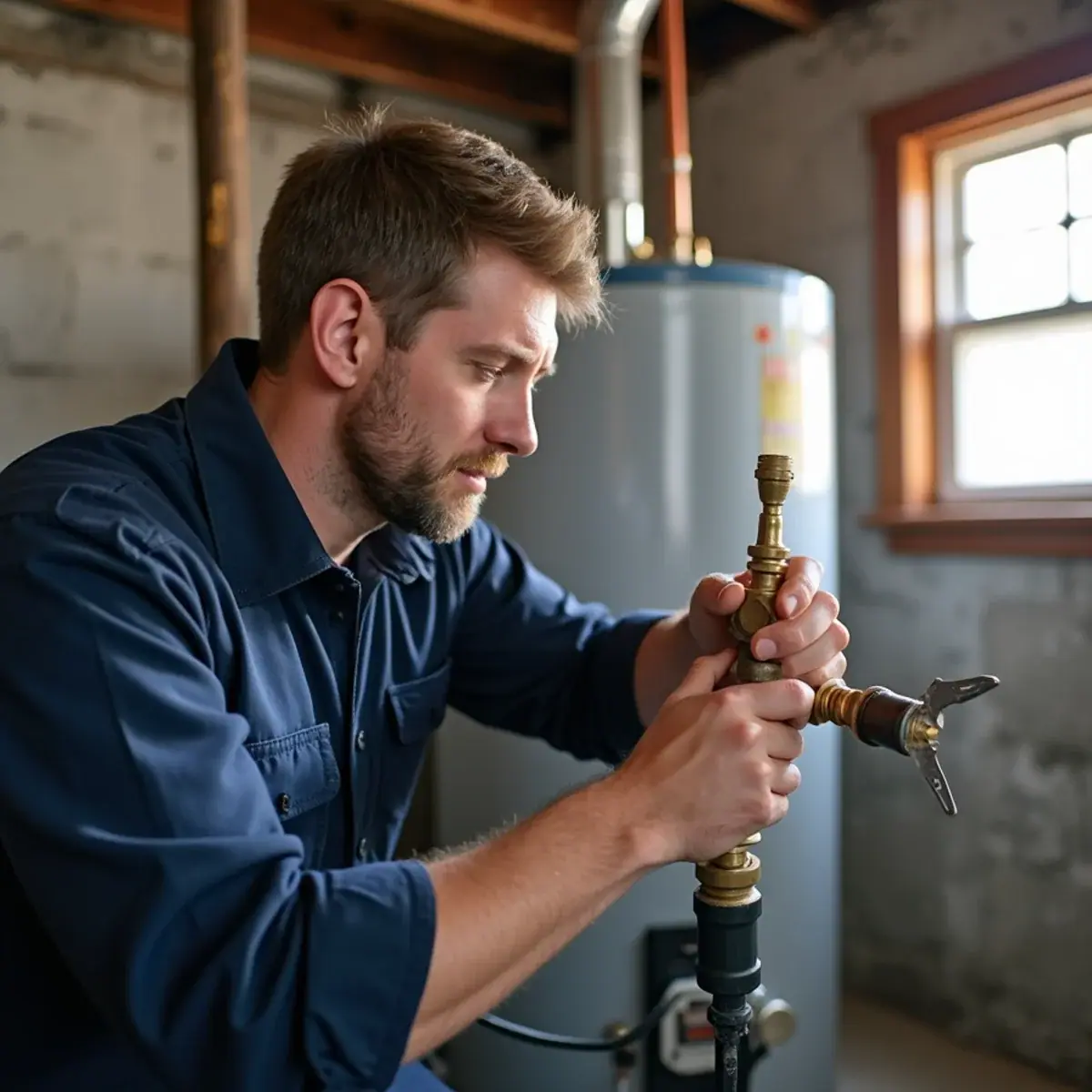
Most gas tanks here last roughly 8 to 12 years. Flushing a few gallons from the drain valve once a year slows the buildup, and checking the anode rod every few years protects the lining. On a tank never flushed, opening the drain can leave a valve that will not reseal, so let the plumber handle older heaters.
The anode rod is a magnesium or aluminum rod that corrodes so the tank lining does not. Once it is down to its steel core, the tank rusts from inside. A water softener speeds that up.
Neighbors see the same pattern: Addison homes built from the 1960s to the 1990s are often on their second or third heater, and older Lombard basements have the same chimney-vented tanks as Villa Park. See all of our service areas around Villa Park.
How same-day replacement works
Same-day replacement is often possible when a matching unit is in stock locally, which is common for standard 40 and 50 gallon gas tanks. Less common sizes, power-vent models and tankless units may need to be ordered.
- The plumber confirms the tank has failed and quotes the replacement before work starts.
- Gas and water are shut off, and the old tank is drained and disconnected.
- The new heater is set and connected to gas, water, vent and T&P line to current code.
- The tank is filled before the burner is lit, then checked for gas leaks, draft and temperature.
- Removal of the old tank and the permit inspection are included in the quote.
What affects water heater cost
The plumber gives you a price on site before work starts. These factors decide it:
- Repair or replacement, and which part failed.
- Type and size: standard gas, power vent, electric or tankless, and the capacity.
- Venting changes: a chimney liner or a new PVC vent run through the wall.
- Code updates: expansion tank, gas shut-off, sediment trap and T&P piping.
- Access: a tight closet or finished basement takes longer than an open utility room.
- Permit and timing: the village permit, plus after-hours work can cost more.
Our guide to plumber costs in Villa Park explains how these factors play out.
Water Heater Repair near Villa Park
We send plumbers for water heater repair across Villa Park and the towns around it, including Oakbrook Terrace. See every town we cover on the service areas page, or pick yours:
- Plumber in Lombard, IL (5 to 10 minutes from Villa Park)
- Plumber in Westmont, IL (15 to 20 minutes from Villa Park)
- Plumber in Addison, IL (10 to 15 minutes from Villa Park)
- Plumber in Glen Ellyn, IL (12 to 18 minutes from Villa Park)
- Plumber in Elmhurst, IL (8 to 12 minutes from Villa Park)
Water Heater Repair FAQ: Villa Park, IL
How long does a water heater last in DuPage County?
A gas tank water heater typically lasts about 8 to 12 years on the moderately hard Lake Michigan water supplied through the DuPage Water Commission. Yearly flushing and an anode rod check push it toward the longer end; neglect and high water pressure shorten it. Tankless units can last considerably longer with yearly descaling. The manufacture date is coded in the serial number on the rating plate.
Do I need a permit to replace a water heater in Villa Park?
Yes. Villa Park requires a permit to replace a water heater, because the job involves gas piping, venting and a relief valve. The plumber pulls the permit and the work is inspected, and the permit is included in the price you get before work starts. Skipping it can cause trouble when you sell the house or file an insurance claim.
Tank or tankless for a cold-climate home?
Both work here. A tank is simpler, costs less to install and handles a family's morning rush. Tankless never runs out and saves floor space, but incoming water in a DuPage winter is cold, so the unit must be sized for that temperature rise, and it may need a larger gas line and new venting. On our hard water it also needs yearly descaling.
Why is there water around the base of my water heater?
Find the source first. Water may come from the T&P relief valve discharge pipe, a weeping drain valve, a loose connection on top, condensation on a cold startup, or the tank itself. Anything except a leaking tank can usually be repaired. If water is coming from the tank body or bottom, close the cold supply valve, turn off the gas or power, and plan on a replacement.
When should a water heater be repaired versus replaced?
Repair it when the tank is sound and one part has failed: a thermocouple, gas control, element, thermostat, anode rod or T&P valve. Replace it when the tank itself leaks, when it is past about 10 to 12 years and a major part fails, or when repairs keep coming. If the household now runs out of hot water, a larger tank or a tankless unit may serve better than a repair.
What should a written water heater estimate include?
The heater itself (brand, model, capacity and fuel) and everything around it: gas shut-off and sediment trap, water connectors and valves, T&P discharge pipe, venting work, an expansion tank if needed, the village permit, haul-away of the old tank and any extra access work. Ask for the manufacturer's tank warranty period on the model quoted. Itemized quotes can be compared line by line.