Last updated by Ardmore Plumbers
A sewer line that backs up again a few months after every rodding usually means the pipe itself has failed. In Villa Park, where the median house was built in 1958 and the oldest blocks date to the 1908 and 1910 subdivisions along today's Prairie Path, that pipe is often original clay tile with parkway tree roots in the joints. Call (858) 363-8298 any hour and we send a licensed plumber who cameras the line before recommending anything.
This page covers the broken pipe: cracked, offset, root-packed or collapsed laterals. A simple clog belongs with drain cleaning and sewer rodding, and a sound line that floods when the village main surcharges needs basement flood control.
Warning signs of a sewer line problem
One slow sink is a clog. Trouble across the whole house points to the main line, and trouble that returns on a schedule points to the pipe itself. Watch for:
- Gurgling in the basement floor drain or a toilet when the washing machine empties
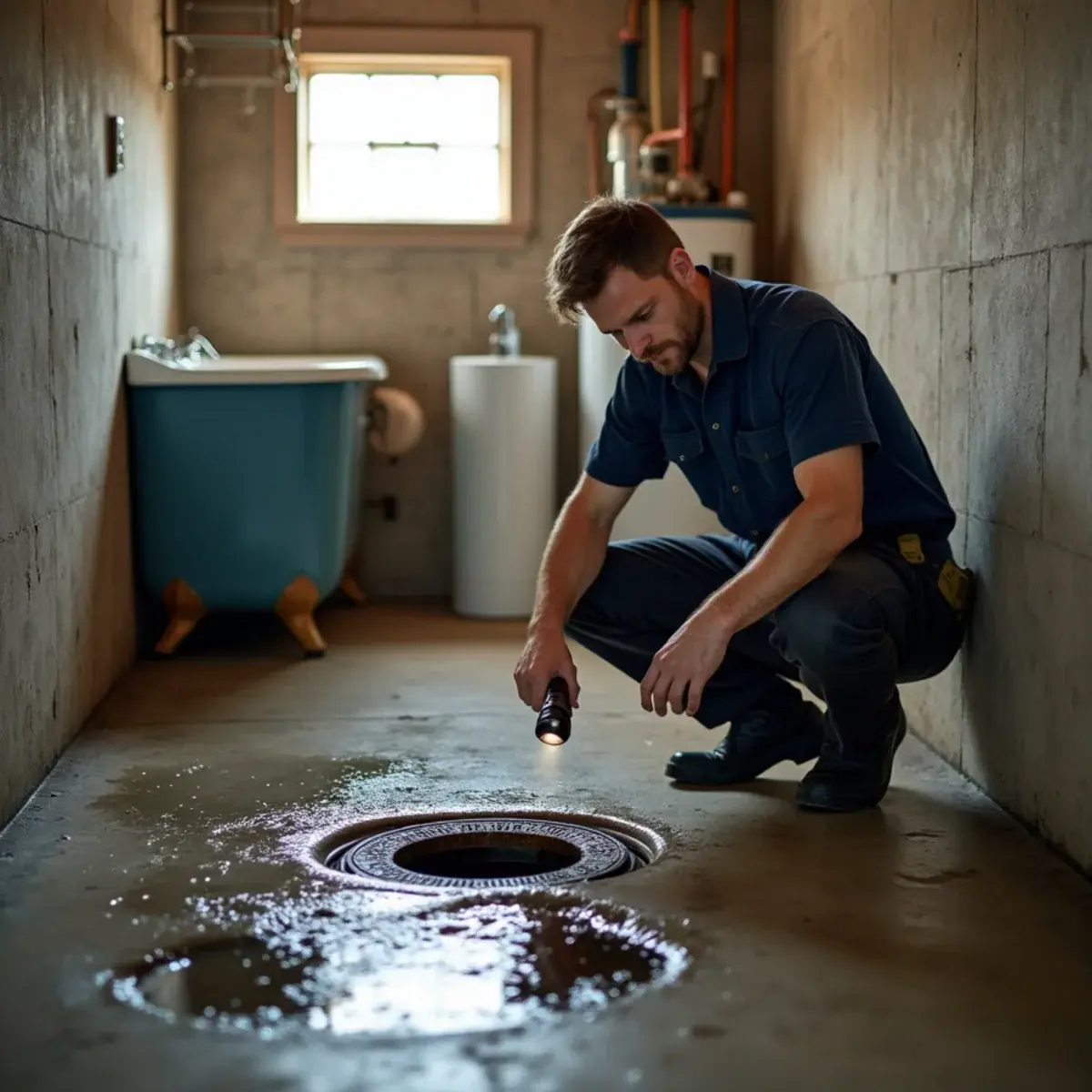
- Gray water or sewage at the floor drain, the lowest opening on the building sewer
- A main line that needs rodding every 6 to 12 months, with root clumps on the cutter each time
- Sewer gas in the basement even though every trap holds water
- A soggy, sunken or unusually green strip of lawn or parkway along the path of the lateral
- Dirt, sand or clay chips on the rodding cable
The last sign matters most. Roots mean open joints; soil and pipe fragments mean the pipe wall is breaking up.
Sewer camera inspection: what it shows and when to get one
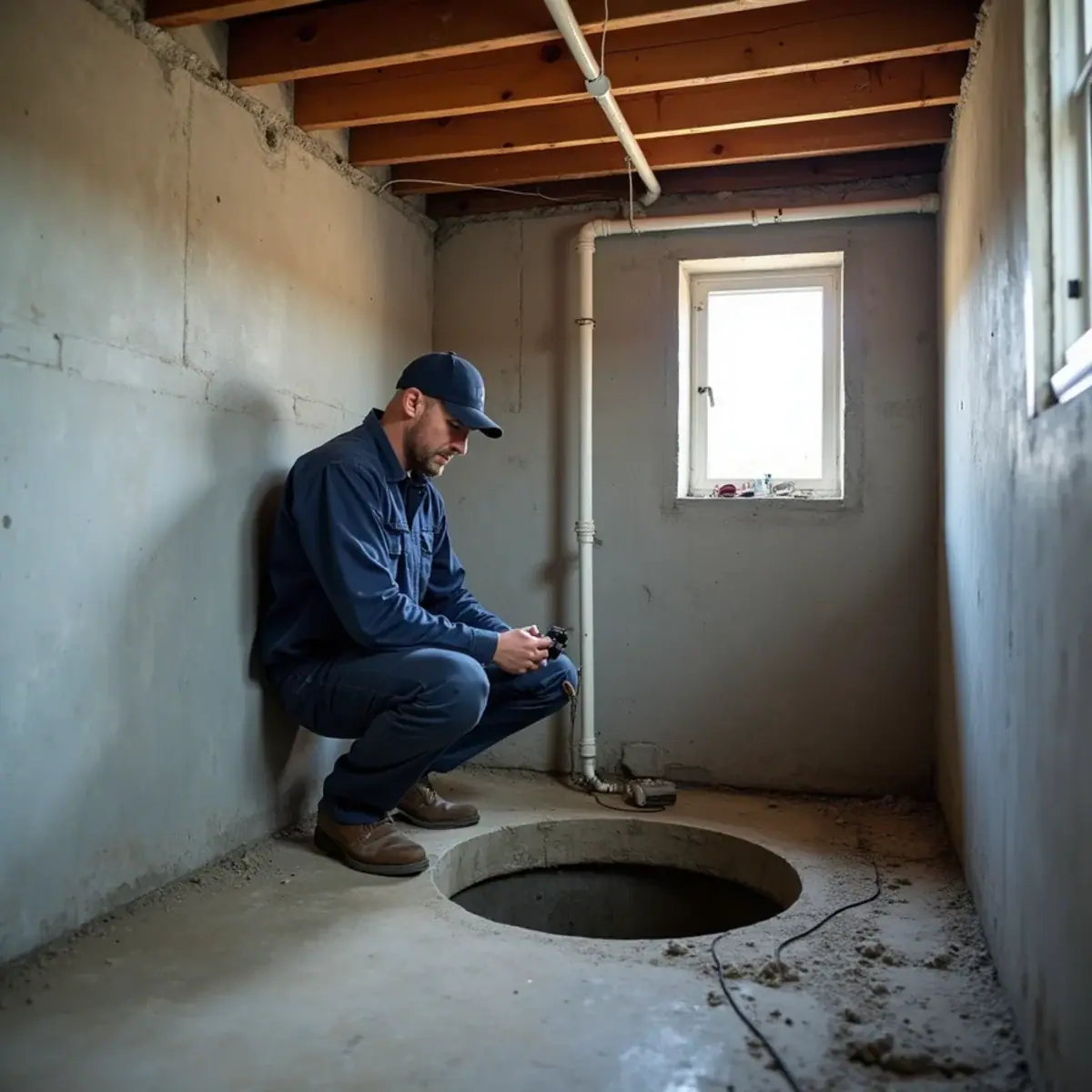
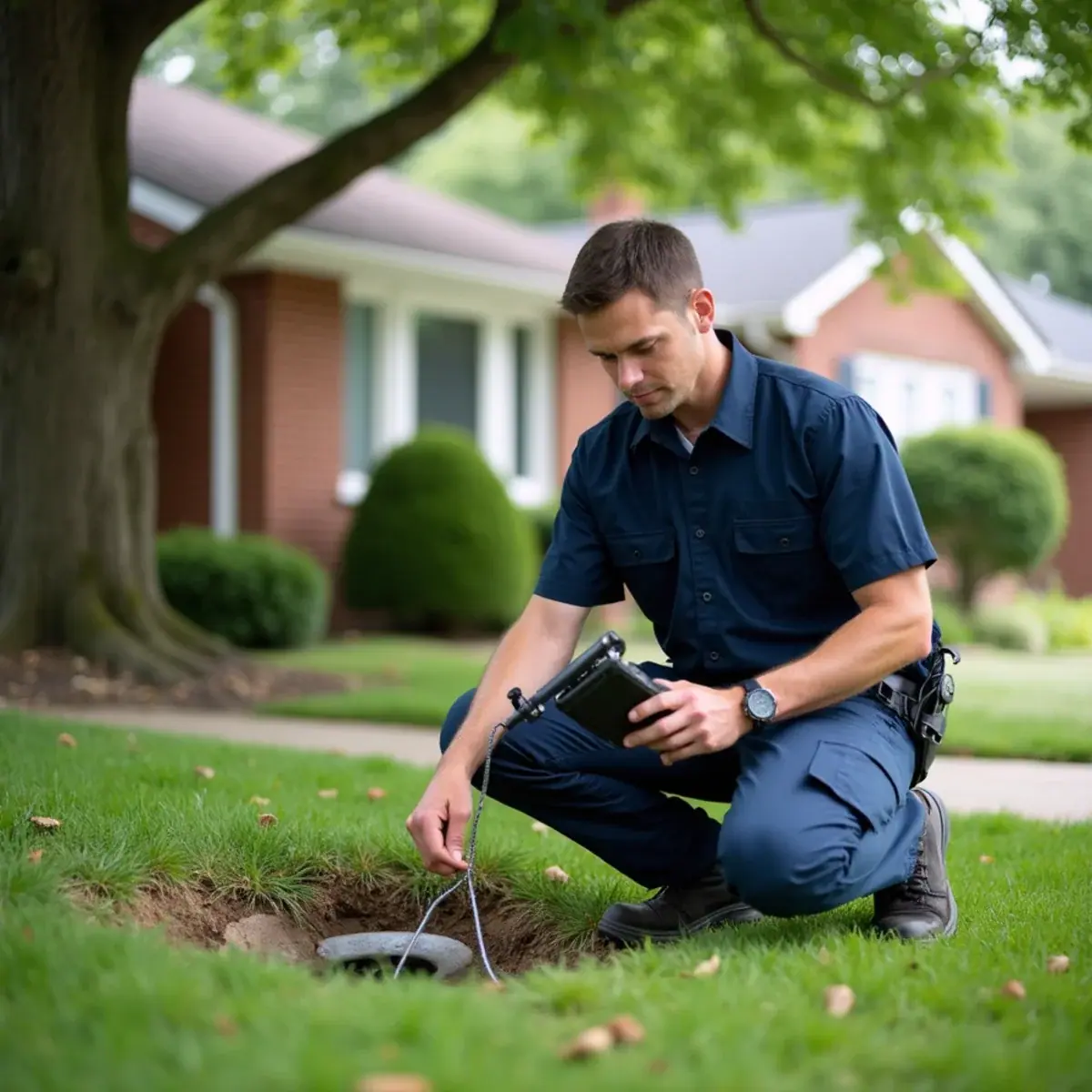
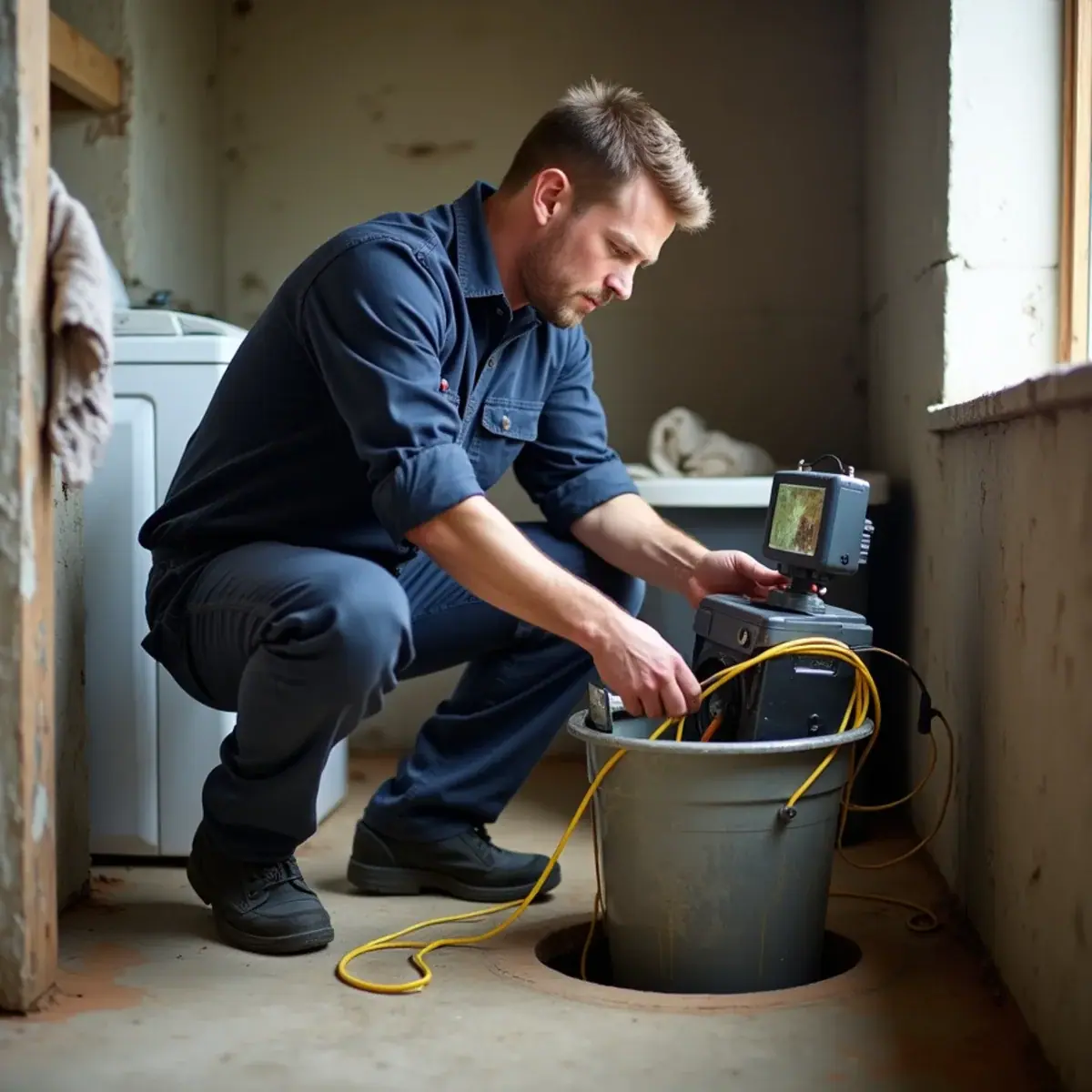
A sewer camera is a waterproof head on a stiff push cable, fed through a cleanout or pulled toilet out to the village main. The plumber watches a live picture with a footage counter, and a surface locator marks the position and depth of each defect on the lawn.
The video shows what a rodding cable cannot: root masses, cracks, bellies where the pipe sags and holds water, offset joints, crushed sections and the tap where the lateral meets the main. It turns a guess into a repair plan.
When a camera inspection makes sense
- After a second backup in a year, before paying to rod the line again
- Before buying a pre-1960 house, especially one with big parkway trees
- Before accepting a repair quote, so the method matches the real damage
- Before an overhead sewer conversion, to confirm the lateral is worth connecting to
How the inspection visit goes
- The plumber opens the best access: an outside cleanout, a stack plug or a pulled toilet.
- A backed-up line gets rodded first. The camera cannot see through standing sewage.
- The camera goes out to the village main while the plumber notes the footage reading at each root mass, crack, offset or sag.
- A locator on the lawn picks up the transmitter in the camera head and marks the spot and depth of each defect.
- You review the video together. Ask for a copy or written notes with the distances before any repair is quoted.
Clay tile laterals in pre-1960 Villa Park homes: roots, offset joints and collapses
Most Villa Park houses built before about 1960 were connected with vitrified clay tile: short sections, commonly 2 to 3 feet long, joined with mortar or early compression joints. The clay lasts. The joints are the weak point.
Parkway maples and oaks on older blocks around Ardmore Ave and Villa Ave send fine roots toward the warm, damp air escaping those joints. Roots grow inside, catch paper and grease, and pry the joint open. Frost and settling soil shift sections out of line, leaving an offset lip that snags the cable and everything flowing past.
Left long enough, a root-split section collapses, and rodding stops helping because there is no full pipe left to clear. Cutting roots with sewer rodding restores flow but repairs nothing. Ask for a camera pass after the roots are cut: it confirms the cutter opened the full pipe and shows whether the joint underneath is only open or also cracked, offset or crushed.
Some post-war ranches have a different weak spot: cast iron under the basement floor rusted through along the bottom, or Orangeburg fiber pipe that flattens with age. The camera tells the plumber which material is in the ground.
Repair options: spot repair, pipe lining, pipe bursting, full replacement
The right method depends on how much of the line is damaged, how deep it runs and what sits on top: a driveway, a walk or a parkway tree worth keeping.
| Method | What it involves | Best fit | Limits |
|---|---|---|---|
| Spot repair | Cut out the bad section, splice in PVC | One bad joint in a sound line | The rest of the clay keeps aging |
| Pipe lining (cured in place) | Cure a resin liner into a new pipe inside the old one | Cracked or rooted clay that holds its shape | Bellies and collapses stay |
| Pipe bursting | Split the old pipe while pulling new HDPE through | Long, fairly straight runs of failed clay | Pits at each end; poor with sharp bends |
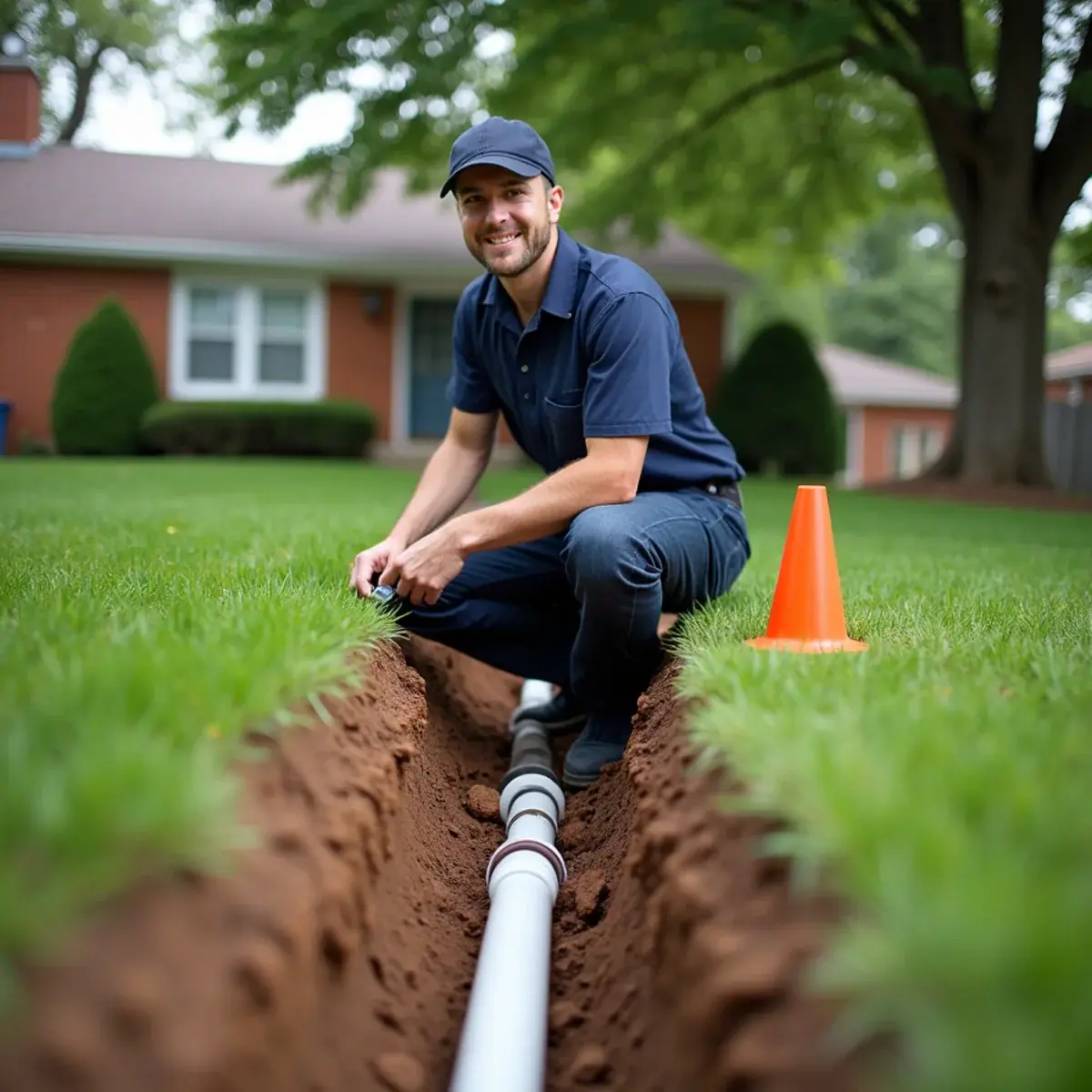
| Full replacement | Dig up the lateral, lay new PVC at proper slope | Collapsed or sagging lines | Most digging and restoration |
Ask to see the footage. Lining a pipe that is flattened or bellied only puts a new skin on the same problem. Full replacement makes sense when defects run along most of the lateral, when a belly or collapse is beyond what lining can correct, or when the pipe is Orangeburg. One bad joint in otherwise sound clay rarely justifies replacing the whole line.
Before you approve sewer line work: what to get in writing
A repeat backup alone does not prove a line needs replacing. Before you approve a dig, liner or replacement, get these answers in writing:
- Camera findings: what the footage shows, how far from the cleanout and how deep.
- Affected length: one joint, one section or most of the run.
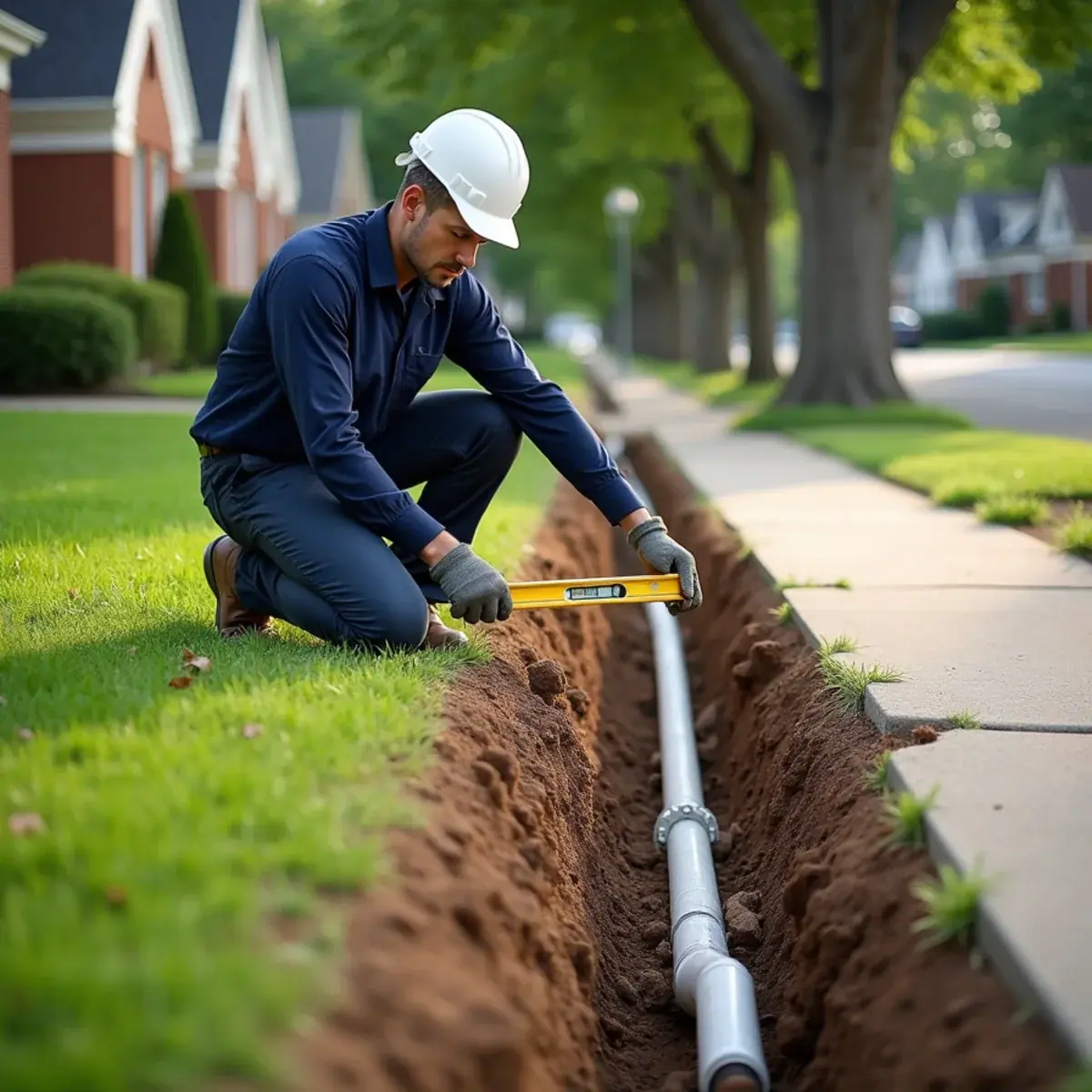
- Access method: lining through a cleanout, pits for bursting or an open trench, and where each hole goes.
- Alternatives: which other methods were considered and why they do not fit your line.
- Permits: who pulls the village permit and calls JULIE, and when the inspection happens. The trench usually stays open until the inspector signs off.
- Restoration: who regrades and seeds or sods the trench, replaces a cut driveway or sidewalk slab, and tops up the trench when the backfill settles.
- Time without a sewer: how long the house will be without working drains.
- Proof afterward: a final camera pass through the new pipe, and any warranty terms on the work in writing.
Every plumber we send is licensed and insured in Illinois. You can verify any plumber's license through the Illinois Department of Public Health.
Adding an outside cleanout so the line can be rodded properly
Many older Villa Park houses have no exterior cleanout. Every rodding goes through the floor-drain trap or a plug on the basement stack, and the cutter fights past a trap before it reaches the roots.
An outside cleanout is a riser from the lateral to a capped fitting at grade, just outside the foundation. It gives a straight shot toward the street for rodding and cameras and keeps dirty cable out of the basement. Add one while the ground is already open for a repair; a two-way cleanout lets the line be worked in both directions.
Permits, parkway digs and the village reimbursement for building sewer repairs
Expect lateral work in Villa Park to need a village permit and an inspection before backfill; the plumber pulls it. Every dig starts with a JULIE locate (811 in Illinois). For parkway digs, ask up front who restores the grass, sidewalk and curb.
The building sewer tier of the village program
Villa Park's Home Flood Prevention Reimbursement Program has a building sewer upgrade and repair tier that covers a backflow prevention valve and sanitary sewer lateral replacement. It reimburses 50% of the lowest qualified estimate plus the permit cost, up to $3,500 per application and $5,000 per lifetime. Check current terms, and confirm eligibility with Villa Park Public Works.
- Get a camera inspection and written estimates; the program works from the lowest qualified one.
- Apply for eligibility before starting work, through the village's online Request for Eligibility Determination.
- Have the plumber pull the permit and schedule the inspection.
- Keep the paid invoice, permit and inspection sign-off for the reimbursement request.
The village decides every application; no plumber can promise approval. Our guide to the Villa Park flood prevention reimbursement covers all three tiers.
Your lateral vs the village main: who is responsible
In most DuPage County towns the homeowner owns the lateral out to the village main; confirm Villa Park's policy for your address. That usually includes the stretch under the parkway, while the village maintains the main itself.
The footage usually settles it. Damage in your lateral is your repair. A healthy lateral that still backs up in storms points to a surcharging main, a flood-control job.
We send plumbers for sewer work across Villa Park and into Lombard, Addison and Westmont. See every town we serve around Villa Park.
Sewer Line Repair near Villa Park
We send plumbers for sewer line repair across Villa Park and the towns around it, including Oakbrook Terrace. See every town we cover on the service areas page, or pick yours:
- Plumber in Lombard, IL (5 to 10 minutes from Villa Park)
- Plumber in Westmont, IL (15 to 20 minutes from Villa Park)
- Plumber in Addison, IL (10 to 15 minutes from Villa Park)
- Plumber in Glen Ellyn, IL (12 to 18 minutes from Villa Park)
- Plumber in Elmhurst, IL (8 to 12 minutes from Villa Park)
Sewer Line Repair FAQ: Villa Park, IL
How do I know if my clay sewer line is failing?
Repeated backups are the first clue, especially a line that needs rodding more than once a year. Roots on the cable mean open joints; dirt or clay chips mean broken pipe. A camera inspection confirms it, showing each crack, offset, sag or collapse with its distance and depth, so you know what needs fixing before anyone digs.
Can you fix a sewer line without digging up the yard or parkway?
Often, yes. Cured-in-place lining builds a new pipe inside the old one through a cleanout, and pipe bursting needs only a small pit at each end. Both work well under parkway trees and driveways. A collapsed or badly sagging line usually has to be dug up and replaced, and the camera shows which situation you have.
Does Villa Park help pay for sewer lateral repairs?
It can. The Home Flood Prevention Reimbursement Program has a tier for backflow valves and sanitary sewer lateral replacement that reimburses 50% of the lowest qualified estimate plus the permit cost, up to $3,500 per application. Check current terms, apply for eligibility before starting work, and confirm the criteria with Villa Park Public Works. Approval is the village's decision.
Who is responsible for the pipe between my house and the street?
Usually you are. In most DuPage County towns the homeowner owns the lateral from the house to the village main, including the section under the parkway, while the village maintains the main. Confirm Villa Park's policy for your address. A camera inspection with a locator shows exactly where a defect sits.
When should a sewer line be replaced instead of repaired?
Replace it when the camera shows damage along most of the run, a collapse, a belly that holds water or Orangeburg pipe. Repair it when the trouble is one or two bad joints in otherwise sound pipe. A line that needs rodding more than once a year is a reason to camera it, not proof it needs replacing. Ask to see on the footage why a spot repair will not hold.
Should I get a second opinion before replacing my sewer line?
For a full replacement, it is reasonable. Ask for a copy of the camera footage with distances and depths, then have another licensed plumber review it or run their own camera. Two plumbers reading the same video should agree on where the damage is, even if they suggest different methods. A collapsed line backing sewage into the house may not leave time for one.