An overhead sewer gives the more complete protection against basement sewer backups, because it removes the low drain openings that sewer water pushes out of. A backwater valve is less disruptive to install, but it depends on a flap closing cleanly every time, and nothing in the house can drain while it is shut. For homes on combined or overloaded sewers that back up in storms, most plumbers lean toward an overhead sewer, and Villa Park calls it its most recommended option.
The right choice still depends on your basement, your sewer line and how often it floods. Here is how each system works and where each one falls short.
Why basements back up in the first place
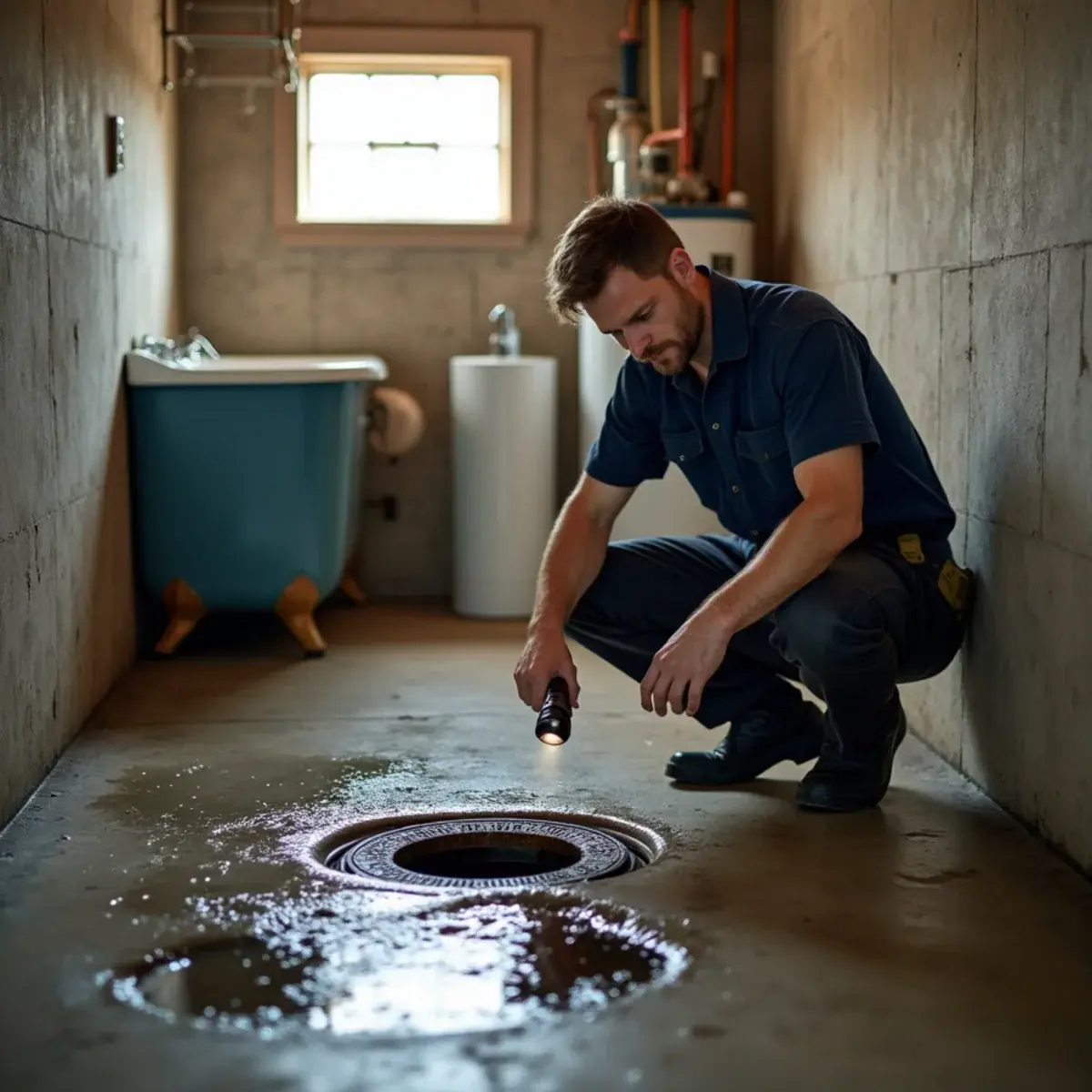
In a typical 1950s Villa Park house, the main drain runs under the basement floor and leaves through the foundation below the level of the street sewer. The floor drain, laundry tub and any basement toilet connect to that buried line by gravity. When a heavy storm fills the village main, especially where combined sewers still carry both storm water and sewage, the water rises up the lateral and spills out of the lowest opening: the floor drain.
Both systems in this guide stop that reverse flow. They just do it differently. If sewer water is on your floor right now, start with what to do in the first 30 minutes.
How an overhead sewer works
An overhead sewer conversion reroutes the house drain so no sewer runs beneath the basement floor. The upstairs plumbing drains into a new pipe that runs along the basement wall or ceiling and exits the foundation high, above the level where the street sewer normally surcharges. The old under-floor connection is cut off.
Basement fixtures can no longer drain by gravity, so the floor drain, laundry and any basement bathroom drain into a sealed ejector pit. A sewage ejector pump lifts that water up into the overhead line. When the main fills, there is no open drain low enough in the basement for sewer water to come out of.
- Strength: passive protection. It does not rely on a valve closing at the right moment.
- Tradeoff: a larger job, with concrete work in the basement floor, a new pipe through the foundation and work outside where it connects to the lateral.
- Tradeoff: basement fixtures depend on the ejector pump and its power supply. In an outage, basement drains stop working, but sewer water still stays out.
How a backwater valve works
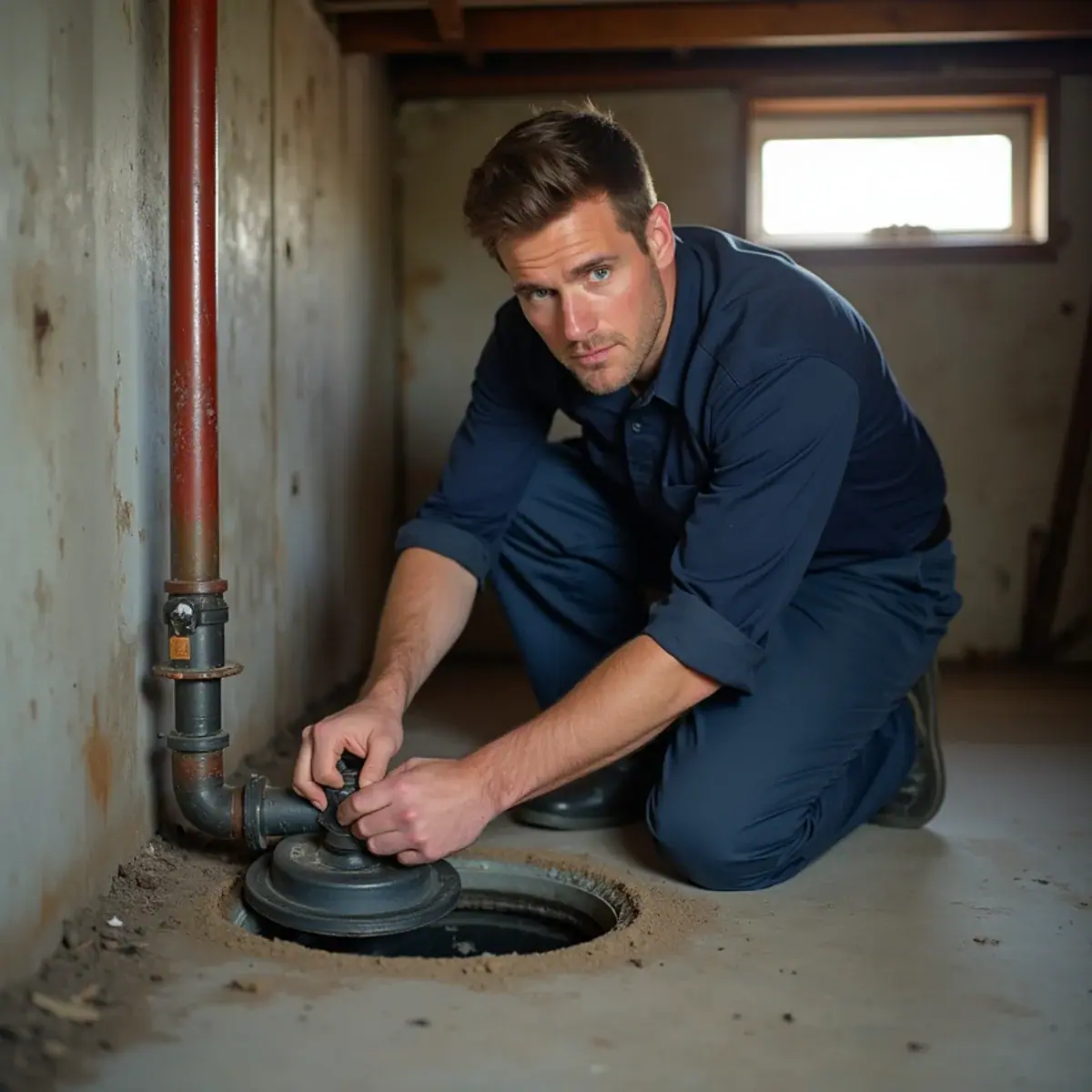
A backwater valve (also called a backflow valve or check valve) is installed on the building sewer, usually in an access pit in the basement floor or in the yard. Inside is a flap that lets water flow out to the street and swings shut when water tries to flow back in.
- Strength: less demolition, and the existing drain layout stays in place.
- Weak point: grease, paper, debris or roots from a clay tile lateral can keep the flap from sealing. The valve needs regular inspection and cleaning through its access cover.
- Weak point: while the valve is closed, no drain in the house can empty. A shower or flush upstairs during a storm has nowhere to go and can come out the floor drain anyway.
Some plumbers install a combined system that pairs a backwater valve with a pump, so house drainage is pumped around the closed valve. It closes the biggest gap of a plain valve but adds a pump to maintain.
Overhead sewer vs backwater valve at a glance
| Overhead sewer | Backwater valve | |
|---|---|---|
| How it stops backups | No low drain opening for sewer water to reach | A flap closes against reverse flow |
| Depends on | Ejector pump for basement fixtures only | The flap sealing cleanly every time |
| Using water during a storm | Upstairs fixtures drain normally | All drains blocked while the valve is closed |
| Installation | Floor, wall and outside work; larger project | Smaller excavation at one point on the line |
| Upkeep | Service the ejector pump and check valve | Inspect and clean the valve regularly |
| Power outage | Sewer water stays out; basement drains unusable | Valve works without power |
What each one looks like in your basement
- Overhead sewer: a large drain along the ceiling, and a floor basin with a bolted lid. Illinois plumbing code requires a sump that takes sewage to be gas-tight, covered and vented, so a vent pipe and a discharge pipe with a check valve rise from the lid, often with a small high-water alarm nearby.
- Backwater valve: an access cover in the floor between the main stack and the front wall, sometimes with a clear lid over the flap. Villa Park's program policy places the valve on the exterior part of the sewer service, so yours may sit in a yard pit instead.
Watch for one mix-up: an ejector serving only a basement bathroom while the floor drain still connects under the slab. That floor drain is unprotected.
Living with each system: upkeep and storm-night outages
Before storm season
- Overhead sewer: run the laundry tub until the ejector starts, empties the basin and stops, with no water sliding back past the check valve. Test the alarm if there is one.
- Backwater valve: open the access cover, clear paper, grease or root strands, and check that the flap swings freely and seats flat. Refit the cover tightly; it holds back the same sewer pressure.
Our spring storm basement checklist covers the rest of the basement, from the sump pit to the floor drain.
When the power fails mid-storm
With an overhead sewer, use the upstairs fixtures and nothing that drains to the basin, because a full basin cannot empty until the power returns. A plain backwater valve needs no power, but it may stay shut for hours while the main is full, so hold the laundry, baths and dishwasher until the street drains.
Which one fits your house
An overhead sewer usually makes sense if your basement backs up in heavy storms, your street is on a combined sewer or has a history of surcharging, or the basement is finished and a single failure would be expensive. It is the fix that holds up when the village main is completely full.
A backwater valve can make sense for houses that back up rarely, where rerouting the plumbing would be impractical, or as a lower-disruption step. It works best on a lateral in good condition, so on old clay pipe it is worth a sewer camera inspection first, and a broken or root-filled line may need sewer line repair before a valve can seal reliably.
Neither system stops groundwater. A sump pump handles water from around the foundation, not sewage, which is why a pump alone will not stop sewer backups. Both belong in a complete basement flood control plan, along with keeping downspouts and sump discharges out of the sanitary sewer, which Villa Park prohibits. And because no system is perfect, check whether your homeowners policy includes sewer backup coverage.
Villa Park's own program policy agrees: it calls the overhead sewer the optimal defense against backup, and the backflow valve the lowest level of protection, though the least invasive.
Matching the system to the basement
| Your basement | What a backup would reach | Usually the better fit |
|---|---|---|
| Unfinished, floor drain only, rare backups | Bare concrete and whatever sits on it | A backwater valve, kept clean, can be enough |
| Unfinished, with washer and laundry tub | Appliances, plus no laundry while a valve is shut | Either; an overhead sewer if storms back it up repeatedly |
| Finished rec room, carpet or drywall | Flooring, walls and contents | An overhead sewer |
| Basement toilet or shower | The lowest fixtures in the house, which overflow first | An overhead sewer, with the bathroom on the ejector |
| Footing tile tied into the sewer under the floor | Groundwater added to every surcharge | Either, after the tile is rerouted to a sump pit |
| Roots, offsets or cracks on camera | A flap that cannot seal | Clear the line with sewer rodding or repair it, then choose |
Take a 1950s ranch on a combined-sewer block with a half-finished rec room and two backups in five summers. A valve would guard the rec room, but every storm night would mean no laundry or showers, and one jammed flap would ruin the finish work. The overhead sewer keeps the house usable. With bare concrete and one backup in twenty years, a valve might do.
Village cost-sharing for both options
Villa Park's Home Flood Prevention Reimbursement Program reimburses 50% of the lowest qualified estimate plus the permit: up to $5,000 for an overhead sewer, and up to $3,500 per application for a backflow prevention valve and/or sewer lateral replacement. Check current terms, apply for eligibility before starting work and confirm details with Villa Park Public Works; approval is not guaranteed. Our guide to applying for the Villa Park reimbursement covers the steps. Whichever system you choose, the village pays nothing until it verifies that sump pumps, downspouts and yard drains are disconnected from the sewer.
Elmhurst runs its own cost-sharing programs, with overhead sewers at 50% up to $5,000 and check valves at 50% up to $3,000 (check current terms). Homeowners there can read about basement flood control in Elmhurst. Lombard's grant is weighted toward the overhead option, with a much lower cap for a check valve; see overhead sewer grants in Lombard.
Getting your basement assessed
A plumber needs to see where your basement fixtures drain, how deep the lateral leaves the house and what the pipe looks like on camera before recommending either system. Call (858) 363-8298 and we will send a licensed plumber who looks at the basement, explains which option fits and gives you a price before any work starts. Every plumber we send is licensed and insured in Illinois.
Questions we hear about this
Can I install both an overhead sewer and a backwater valve?
Some homes have both, but an overhead sewer usually removes the need for a valve because there is no low drain opening left for sewer water to reach. A plumber may still suggest a valve in specific layouts. If you are using a village program, check which items qualify and how the lifetime caps apply before combining them.
Does a backwater valve need maintenance?
Yes. The flap has to seal cleanly to work, and grease, paper or roots can hold it open. Most manufacturers recommend opening the access cover and checking the valve regularly, and after any backup. A valve that has not been checked in years may not close when the next storm fills the sewer.
Is a backwater valve enough if my basement has only a floor drain?
It can be, if the basement is unfinished, backups are rare and the lateral looks sound on camera. The tradeoffs remain: the flap needs cleaning, and every drain in the house is blocked while it is closed. If the floor drain takes water in most heavy storms, or you plan to finish the basement, price an overhead sewer as well.
Does an overhead sewer make noise or smell?
The ejector runs for a short burst whenever the basin fills, much like a sump pump cycling, and the check valve may click as it closes. It should not smell, because the basin is sealed and vented through the plumbing vent system. A sewer odor near the basin usually points to a lid gasket, a seal or the vent, so mention it to the plumber.