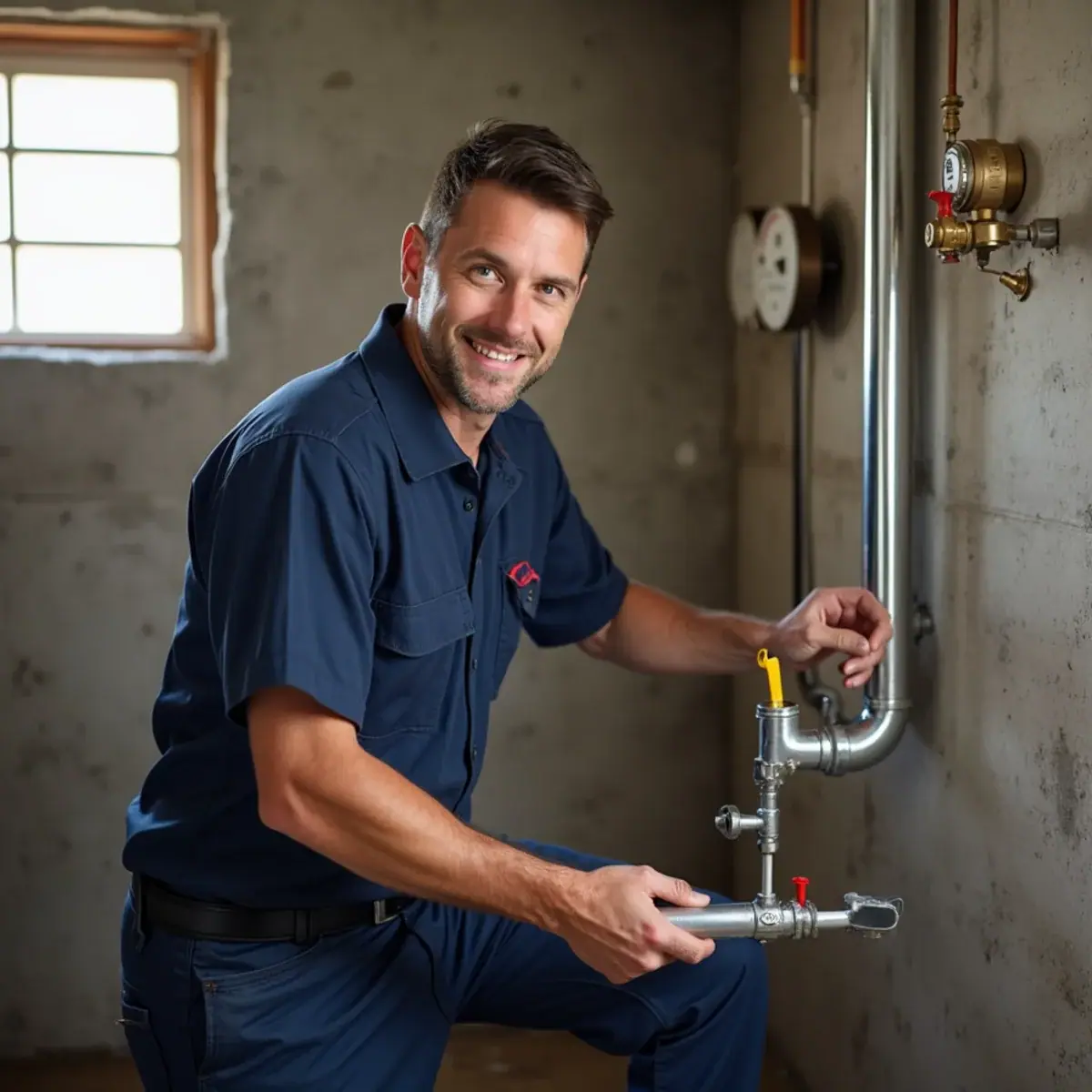
To check for a lead service line, go to where the water line enters your basement, usually through the front wall or floor, and look at the pipe between the floor and the water meter. Lead is dull gray, soft enough to dent, scratches to a bright silver with a key, and a magnet will not stick to it. Villa Park replaces the public side of a lead line (the main to the curb stop, or b-box) at village cost, and the private side (b-box to meter) is a 50/50 cost share up to $5,000. Check current terms on the village's lead service line page and contact Public Works before calling a contractor.
About a fifth of Villa Park's homes were built before 1940, so this is a real question on Ardmore Ave, Villa Ave and the streets around the Illinois Prairie Path.
How to check your water service line at the meter
- Find the water meter. The pipe coming up out of the floor or through the wall just before it is your service line.
- Check the color. Lead is dull gray; copper looks like an old penny; galvanized steel is gray with threaded fittings.
- Try a magnet. It sticks to galvanized steel and does not stick to lead or copper.
- Do a gentle scratch test on the pipe before the meter with a key or coin. Lead turns shiny silver and feels soft; galvanized stays gray and hard.
- Look for a wiped joint: a smooth, bulb-shaped swelling near the shut-off, typical of old lead work.
| Material | Color | Scratch test | Magnet |
|---|---|---|---|
| Lead | Dull gray | Shiny silver, soft | Does not stick |
| Galvanized steel | Gray, threaded joints | Stays gray, hard | Sticks |
| Copper | Brown or penny-colored | Bright copper | Does not stick |
| Plastic (PE or PEX) | Black, blue or white | Not metal | Does not stick |
Scratch lightly, then wash your hands
A light scratch is enough. Do not file, saw or bend an old service line, which can loosen scale or crack a fitting, and wash your hands after touching a pipe you suspect is lead.
Check the village records, not just the pipe you can see
The pipe at your meter shows only the last few inches. A line can be copper inside the house and lead under the yard, or a past repair can leave a lead section buried in the parkway. Villa Park publishes its lead service line inventory, and Public Works can tell you what its records show for your address. That page also posts the 2025 material inventory and a form for reporting what you find at your meter.
Illinois passed the Lead Service Line Replacement and Notification Act in 2021, which requires water systems statewide to inventory their service lines and replace lead lines over time. Your village's inventory is part of that statewide effort. The Act took effect January 1, 2022. Complete inventories were due to the Illinois EPA by April 15, 2024 and final replacement plans are due April 15, 2027, after which systems replace lead lines at a set yearly pace over 15 to 50 years, depending on how many they have. Villa Park filed its first draft plan on April 15, 2024 and revises it yearly until then.
Two rules matter if you plan work yourself. Partial lead line replacement is prohibited outside narrow emergency cases. And before replacing part of a lead line, or a galvanized line connected downstream of lead, you must give the water supply at least 45 days' notice. In Villa Park that means Public Works, which the village asks you to call first anyway.
Galvanized steel is part of this picture. A galvanized line that sat downstream of lead can hold lead in its scale, so it is often grouped with lead lines for replacement. Old galvanized pipe also narrows with rust inside, which is why many older homes here have low water pressure. The village says lead, or galvanized connected downstream of lead, must be replaced from the main into the building regardless of who owns each part.
Why lead service lines matter for your health
The U.S. EPA states that no safe level of lead exposure has been identified for children, and the Illinois Department of Public Health gives similar guidance. Young children and pregnant women face the greatest risk. Lake Michigan water delivered through the DuPage Water Commission is treated to limit corrosion, but lead can still dissolve into water that sits in the line.
Until the line is replaced, the usual precautions are:
- Run the cold tap for a few minutes after water has sat for hours, such as first thing in the morning; the village suggests 3 to 5 minutes
- Use only cold water for drinking, cooking and baby formula
- Remember that boiling does not remove lead
- Use a filter certified to remove lead, and change cartridges on schedule; look for NSF/ANSI 53 on the label
- Clean faucet aerators, which trap small particles
What replacement involves and what affects the cost
The new private side is usually copper, run from the b-box into the basement below the frost line, with a new shut-off valve at the meter. Many lines can be pulled or bored under the lawn from two small pits instead of a full trench. Water is off for part of the day, and a village permit is required (for program work the village waives the fee).
- Distance from the b-box to the house and how deep the line runs
- Driveways, walks, parkway trees or landscaping in the path
- Where the line enters the basement, and whether a finished wall must be opened
- Whether the meter area needs new valves or old galvanized pipe needs replacing inside
- Restoring lawn and concrete afterward
Our plumbing repair service handles service lines and old galvanized pipe, and the plumber gives the price on site before any work starts. For a broader look at pricing, see what affects plumber cost in Villa Park. The water service line is a separate pipe from the sewer lateral; if your worry is roots and backups, read our guide to tree roots in a clay sewer line.
Lead lines in Lombard and neighboring towns
Lead was used for service lines across the Chicago area for decades before it was banned for new plumbing nationally in 1986, so older homes nearby can have them too. In Lombard, around the older downtown near the Metra station and Lilacia Park, the same check at the meter applies. Each village keeps its own inventory and sets its own program terms, so call your village water department before assuming Villa Park's cost share applies to you. The same check applies to the century-old houses near Cass Ave in Westmont.
Questions we hear about this
Is my water safe to drink if I have a lead service line?
It can contain lead, especially after sitting in the pipe for hours. Follow the precautions above: flush the cold tap, use a filter certified for lead, and never use hot tap water for cooking or formula. Ask the village about water testing. Replacing the line is the only permanent fix.
Who pays to replace a lead service line in Villa Park?
The village replaces the public side, from the main to the b-box, at its cost. The homeowner is responsible for the private side, from the b-box to the meter, with a village 50/50 cost share up to $5,000. Check current terms on the village's lead line page and contact Public Works before hiring anyone.
Can any plumber replace the private side of my line?
The work must be done by a licensed plumber with a permit, and the village asks for at least two estimates before cost-share work. Every plumber we send is licensed and insured in Illinois. You can confirm any plumber's license through the Illinois Department of Public Health.
Is it safe to shower if my home has a lead service line?
Yes, according to the village. Lead is not absorbed through the skin, so bathing and showering in water that contains lead is not considered a health risk. The concern is water you swallow, for drinking, cooking and baby formula; for that, flush the cold tap and use a filter certified to NSF/ANSI 53 until the line is replaced.
Will Villa Park replace my lead line when it works on my street?
Possibly. When the village plans street or water main work, it checks every water service in the project area and includes lead lines it finds in the bid. Projects are usually planned two to five years ahead, with owners notified directly. The private side keeps the same 50/50 share, and the village offers a zero-interest payment plan of up to 36 months on those projects. Check current terms.